
Caldwell County Probate Court Records
Caldwell County probate court records are kept at the County Clerk's office in Lockhart. If you need to find a will, estate case, or guardianship filing, that office is where you start. The County Clerk handles all probate matters for this part of central Texas. You can visit the courthouse in person or send a written request by mail. Caldwell County sits just south of Austin and has a mix of rural land and small towns. Probate court records here go back many years and cover wills, heirship cases, estate inventories, and letters of administration. The clerk's staff can help you look up a case by name or case number, and they can make copies of most documents on file.
Caldwell County Overview
Caldwell County Clerk Probate Records
The Caldwell County Clerk is the main office for all probate court records in the county. This office files new probate cases, keeps the records on file, and gives out copies when you ask. Staff there can look up a case for you. They handle wills, estate cases, guardianships, and mental health matters. The clerk also takes care of land records, vital stats, and court files for the county.
Caldwell County uses the constitutional county court for most probate cases. The County Judge presides over probate hearings unless the case gets moved to district court. Under Texas Estates Code Chapter 33, the county court has original jurisdiction over probate proceedings. That means all wills, estate administrations, and guardianship cases start here at the Caldwell County Courthouse in Lockhart.
| Office | Caldwell County Clerk |
|---|---|
| Address | Caldwell County Courthouse Lockhart, TX 78644 |
| Phone | (512) 398-1824 |
| Hours | Monday through Friday, 8:00 AM to 5:00 PM |
| Website | co.caldwell.tx.us |
Search Caldwell County Probate Records
You can look up probate court records in Caldwell County a few ways. The most direct route is to visit the courthouse in Lockhart. Walk into the County Clerk's office and ask to search their records. They have public terminals you can use. Give the staff a name or case number and they will pull up what you need.
For a statewide search option, the re:SearchTX portal run by the Texas courts lets you look up case information from many counties. You can try searching for Caldwell County probate cases there by party name. Not all older records show up online, though, so an in-person visit might still be needed for cases from years back. The eFileTexas system handles electronic filing for attorneys, and some case data flows through that platform too.
To search by mail, send a written request to the Caldwell County Clerk. Include the full name of the person whose estate you are looking for, a date of death if you know it, and a check for copy fees. The clerk charges about $1 per page for plain copies and $5 for each certified document. Allow a few business days for them to process your request.
Caldwell County Clerk Online Portal
The Caldwell County Clerk's website provides basic information about office services and contact details for probate record requests. You can visit the Caldwell County website to find office hours and directions to the courthouse.
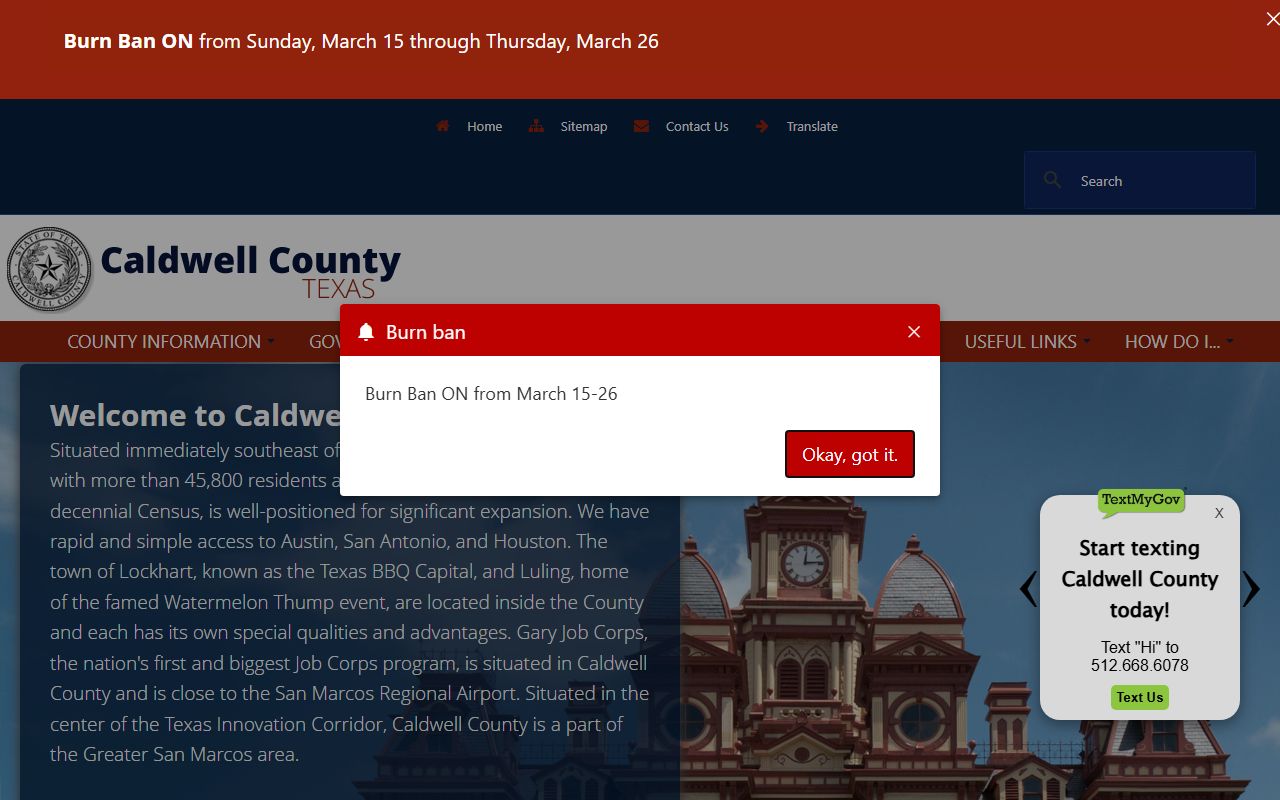
The site shows which services the clerk offers and how to reach the office. For full probate case searches, you may need to visit in person or call ahead.
Probate Filing in Caldwell County
Filing a probate case in Caldwell County follows the same rules as the rest of Texas. Under Texas Estates Code Chapter 256, you can probate a will as a muniment of title if no administration is needed. This is a simpler path. It works when the only goal is to transfer property to the right people and there are no unpaid debts besides liens on real estate.
The standard probate filing fee runs about $360 in most Texas counties, and Caldwell County is no different. That fee covers the court costs, records management charges, and state-required surcharges. You also pay for citations if the court needs to notify other parties. Those run about $8 each for issuance. Service by the sheriff or constable adds more cost on top of that.
Under Texas Estates Code Chapter 51, probate must be filed in the county where the person lived at the time of death. So if someone lived in Caldwell County, this is the right place. The application to probate a will has to be filed within four years of the date of death. After that window closes, the court cannot issue letters testamentary.
Independent administration is the most common form of probate in Texas. Under Texas Estates Code Chapter 257, the executor named in the will can manage the estate without much court oversight. This keeps costs low and speeds things up. Dependent administration, on the other hand, means the court watches every step. That path is used when there is no will or when the will does not call for independent administration.
Caldwell County Probate Court Records Contents
A probate case file in Caldwell County can hold many types of documents. The exact contents depend on the kind of case. A simple will probate might have just a few pages. A contested estate with lots of property could fill a thick folder.
Common documents in a Caldwell County probate file include:
- The original will or a copy filed with the court
- Application for probate or letters of administration
- Inventory and appraisement of estate assets
- Letters testamentary or letters of administration
- Court orders and final judgments
- Claims filed by creditors against the estate
Most probate records in Caldwell County are open to the public. You do not need to be a family member or an heir to look at them. Some records may be sealed, though. Guardianship files involving minors can have restricted access. Mental health commitment records are not open to the public in most situations. Under Texas Government Code Chapter 552, the Public Information Act gives you the right to request government records, but there are exceptions for certain confidential documents.
Small Estate Affidavit in Caldwell County
Not every estate needs a full probate case. Under Texas Estates Code Section 205, a Small Estate Affidavit can be used when someone dies without a will and the total estate is worth less than $75,000, not counting the homestead. All the heirs must sign the affidavit. It gets filed with the Caldwell County Clerk, and the court reviews it.
This option saves time and money. Filing fees for a small estate affidavit still apply, but the process is much faster than a full probate case. You do not need an attorney, though it helps to have one. The Caldwell County Clerk can tell you what forms you need. If any heir refuses to sign, you cannot use this method and will need to go through regular probate.
Note: The Small Estate Affidavit works only when there is no will and the estate value stays under $75,000 excluding the homestead and exempt property.
Caldwell County Probate Court Resources
If you need help with a probate matter in Caldwell County, several resources can point you in the right direction. The Texas State Law Library in Austin has research guides on probate law and is open to the public. Their staff can help you find the right statutes and forms.
TexasLawHelp.org offers free self-help guides for people handling probate on their own. The site has step-by-step instructions and links to official court forms. The Texas courts website also posts all the official forms and rules for probate cases statewide.
For finding a probate attorney in the area, the State Bar of Texas lawyer referral service can help. Call (800) 252-9690. Lone Star Legal Aid serves the central Texas region and may help people with low income who need legal assistance with estate matters.
Nearby Counties
These counties border Caldwell County. If you are not sure which county handles a probate case, check where the person lived at the time of death. Probate must be filed in the right county under Texas law.