
Search Wichita County Probate Records
Wichita County probate court records are filed and maintained at the County Clerk's office in Wichita Falls. The county court handles all probate matters, including wills, estate administration, guardianship appointments, and heirship determinations. Wichita County has a population of about 132,200, and the County Clerk serves as the official record keeper for probate filings. You can search for probate cases by visiting the courthouse or contacting the clerk by phone. Estate records in Wichita County include case documents, court orders, and letters testamentary. The clerk's office can provide copies of most probate documents upon request.
Wichita County Overview
Wichita County Clerk Probate Office
The County Clerk in Wichita Falls keeps all probate court records for Wichita County. This office processes new filings, stores case documents, and provides copies to the public. The clerk's staff can help you find a specific case or get the papers you need. Walk-in visits are welcome during business hours.
Probate matters in Wichita County go through the County Court at Law. The court handles estates of people who died with or without a will, guardianship cases for minors and incapacitated adults, and mental health commitments. Each case creates a file at the clerk's office that stays part of the public record. Most probate files are open to anyone who asks.
| Office | Wichita County Clerk - Probate Division |
|---|---|
| Address | 900 Seventh Street, Room 250, Wichita Falls, TX 76301 |
| Phone | (940) 766-8195 |
| Hours | Monday through Friday, 8:00 AM to 5:00 PM |
| Website | www.wichitacounty.org |
How to Search Wichita County Probate Records
The Wichita County Clerk's office in Wichita Falls is your main resource for probate record searches. You can visit in person during business hours or call (940) 766-8195 to ask about a case. Give the clerk a case number or party name to speed up your search.
In-person visits let you view the actual case file and get copies right away. Bring a valid ID. The clerk can look up cases by name or number. Plain copies and certified copies are both available. Certified copies cost more but carry the official court seal needed for legal purposes. You can also visit the Wichita County Clerk website for more details on how to request records.
You can also search for Wichita County probate cases through the statewide re:SearchTX system. This tool lets you look up court records from across Texas. For filing new probate cases, attorneys must use eFileTexas. Self-represented filers may still submit paper documents at the clerk's window.
Mail requests are another option. Write to the Wichita County Clerk at the address listed above. Include the case number or the full name of the deceased. Note what documents you need and include a check or money order for the copy fees. The clerk's office will mail the copies back to you.
Wichita County Probate Fees
Probate filing fees in Wichita County follow the schedule set by Texas law. The cost depends on the type of case. Probating a will typically costs less than opening a full administration. Guardianship cases and heirship proceedings each have their own fee structures. The clerk collects fees at the time you file.
Copy fees apply when you need documents from a probate case file. Certified copies cost more than plain copies. The certified copy carries the official court seal and is accepted as a legal document. Contact the Wichita County Clerk at (940) 766-8195 for current rates on copies and certified documents.
If you cannot pay the filing fees, you may qualify for a fee waiver. File a Statement of Inability to Afford Payment of Court Costs under Texas Civil Practice and Remedies Code Chapter 13. The court reviews your financial situation and decides if you qualify. Blank forms are available at the courthouse or from txcourts.gov.
Wichita County Probate Record Types
Probate court records in Wichita County include several types of filings. The most common is the Application to Probate a Will, filed under Texas Estates Code Chapter 256. This starts the process of proving a will is valid. The court then issues Letters Testamentary, which give the executor legal authority to act on behalf of the estate.
When someone dies without a will, the court may appoint an administrator through a Determination of Heirship under Texas Estates Code Chapter 202. This proceeding identifies the legal heirs and their shares of the estate. The administrator gets Letters of Administration to manage and distribute assets.
Small estates valued under $75,000 may use a Small Estate Affidavit under Texas Estates Code Section 205. This avoids full probate. The affidavit must list all assets, debts, and heirs. A judge reviews and approves it before assets can be transferred.
Other probate records in Wichita County include:
- Guardianship applications and appointment orders
- Mental health commitment records
- Estate inventories and accountings
- Muniment of title proceedings for simple estate transfers
- Independent administration documents under Estates Code Chapter 401
Wichita County Probate Resources
Here is what the Wichita County Clerk site looks like when you visit it.
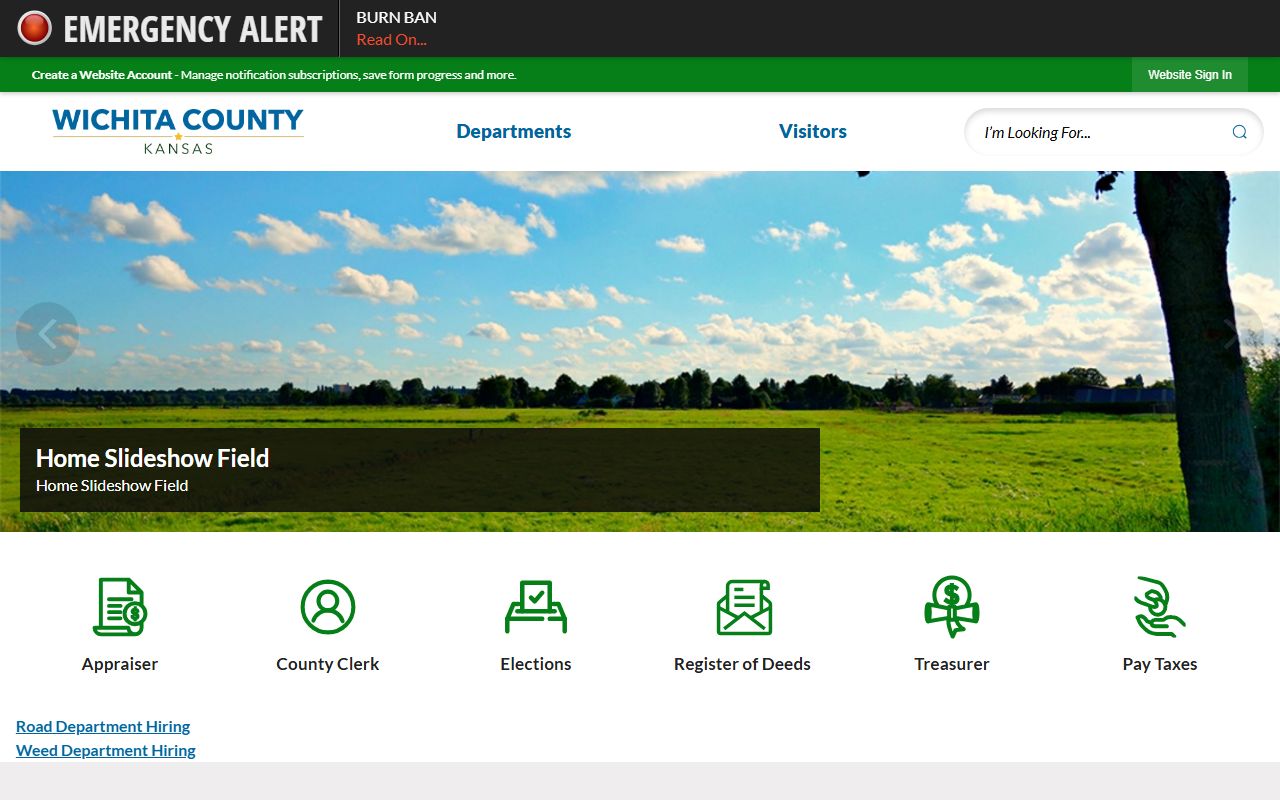
The portal provides public access to probate records and estate documents.
Legal Help for Wichita County Probate
Probate law can be hard to navigate on your own. Several resources are available to help people in Wichita County understand the process and find assistance. The Texas State Law Library provides free research help and has guides on probate procedures.
The TexasLawHelp website offers self-help guides and forms for people who cannot afford a lawyer. Topics include how to probate a will, how to file for guardianship, and how to use a small estate affidavit. The State Bar of Texas also runs a lawyer referral service at (800) 252-9690 for people who need to hire a probate attorney.
Official court forms for probate cases are available at txcourts.gov. These include forms approved by the Texas Supreme Court. The Wichita County Clerk's office can tell you which forms you need for your specific case type. Staff cannot give legal advice, but they can point you in the right direction.
Note: The Wichita County Clerk cannot provide legal advice or tell you how to fill out forms, but they can help you locate records and explain the filing process.
Texas Probate Law in Wichita County
All probate cases in Wichita County follow the Texas Estates Code. This law replaced the old Texas Probate Code on January 1, 2014. It covers everything from filing a will to distributing estate assets. The Estates Code also sets the rules for guardianships and mental health proceedings.
Venue rules under Estates Code Chapter 33 say probate must be filed in the county where the deceased person lived. If someone who lived in Wichita County passes away, their estate gets probated in Wichita Falls. This is true even if they owned property in other counties.
Texas uses independent administration as the most common form of probate. Under Estates Code Chapter 401, the executor or administrator can manage the estate without constant court supervision. This makes the process faster and cheaper. Dependent administration, which requires court approval for most actions, is used when the will does not allow independent administration or when the court finds it necessary.
There is a four-year deadline to probate a will in Texas. Under the Estates Code, if you do not file within four years of the person's death, you must show the court that you were not at fault for the delay. After four years, probate as a muniment of title may still be possible, but full administration becomes much harder to get.
Cities in Wichita County
Several cities and towns in Wichita County use the County Clerk's office in Wichita Falls for all probate matters. No city handles its own probate filings. Everything goes through the county court system.
All probate cases for residents of Wichita County are filed at the Wichita County Courthouse in Wichita Falls. The County Clerk handles all estate and guardianship records.
Nearby Counties
These counties border Wichita County. If you are not sure which county handles a probate case, check the address where the person lived. Texas law says probate must be filed in the county where the deceased had their home.
Archer County • Clay County • Wilbarger County • Young County