
Collin County Probate Court Records
Collin County probate court records are filed and kept at the County Clerk's office at the courthouse in McKinney. This fast-growing county north of Dallas has over one million residents and handles a steady flow of estate cases, guardianships, and related probate matters. You can search for probate records online through the Collin County Judicial Records system or the county's probate records portal. The clerk's office processes new filings, issues letters testamentary, and provides copies of court documents. Whether you need to look up a will that was probated, check the status of an estate case, or get certified copies for legal purposes, the probate division is your starting point.
Collin County Overview
Collin County Clerk Probate Division
The Collin County Clerk's office handles probate records as part of its civil court responsibilities. Probate court jurisdiction in Collin County covers estate administration, guardianships, and related matters. The clerk maintains all filed documents and provides public access through online and in-person options.
The county seat is McKinney, where the Collin County Courthouse is located. The clerk's office processes e-filings, manages records requests, and handles fee payments. Office hours and fee schedules are available through the county website. Online payment options are offered for those who prefer not to visit in person. Contact the office for specific fee amounts since they can change from year to year.
| Office | Collin County Clerk - Probate Records |
|---|---|
| Address |
Collin County Courthouse McKinney, TX |
| Website | Collin County Clerk |
| Judicial Records | Collin County Judicial Records Search |
Collin County is one of the fastest-growing counties in Texas. Cities like Plano, Frisco, McKinney, Allen, and parts of Dallas fall within its borders. All probate matters for residents file at the county courthouse in McKinney.
How to Search Collin County Probate Records
Collin County gives you two main ways to search probate records online. The Collin County Judicial Records system lets you search by case number or party name. This covers civil and probate court filings kept by the clerk.
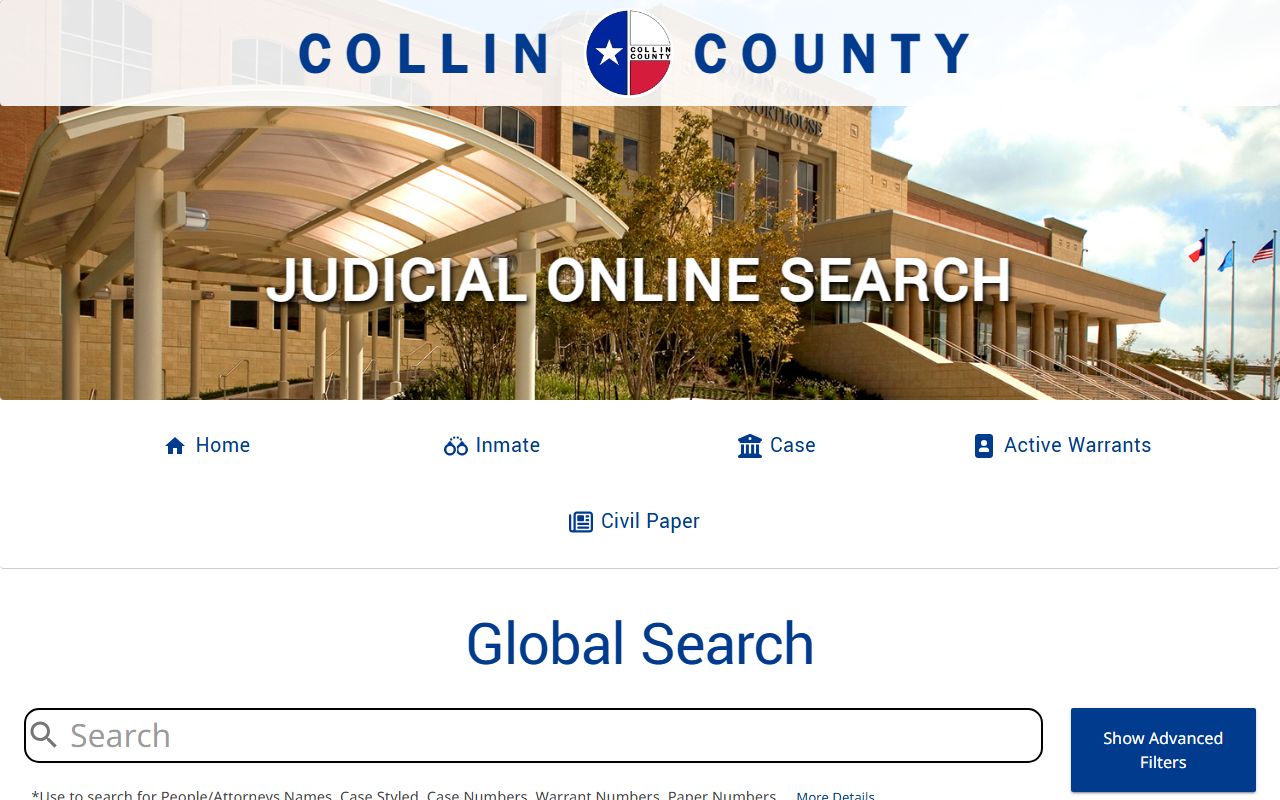
The judicial records search pulls up case information, party details, and filed documents. You can use it to find probate cases, check their status, and see what has been filed. The system is available online around the clock.
The Collin County Probate Records page provides additional information about how probate records work in the county. It covers what types of records are available and how to access them.
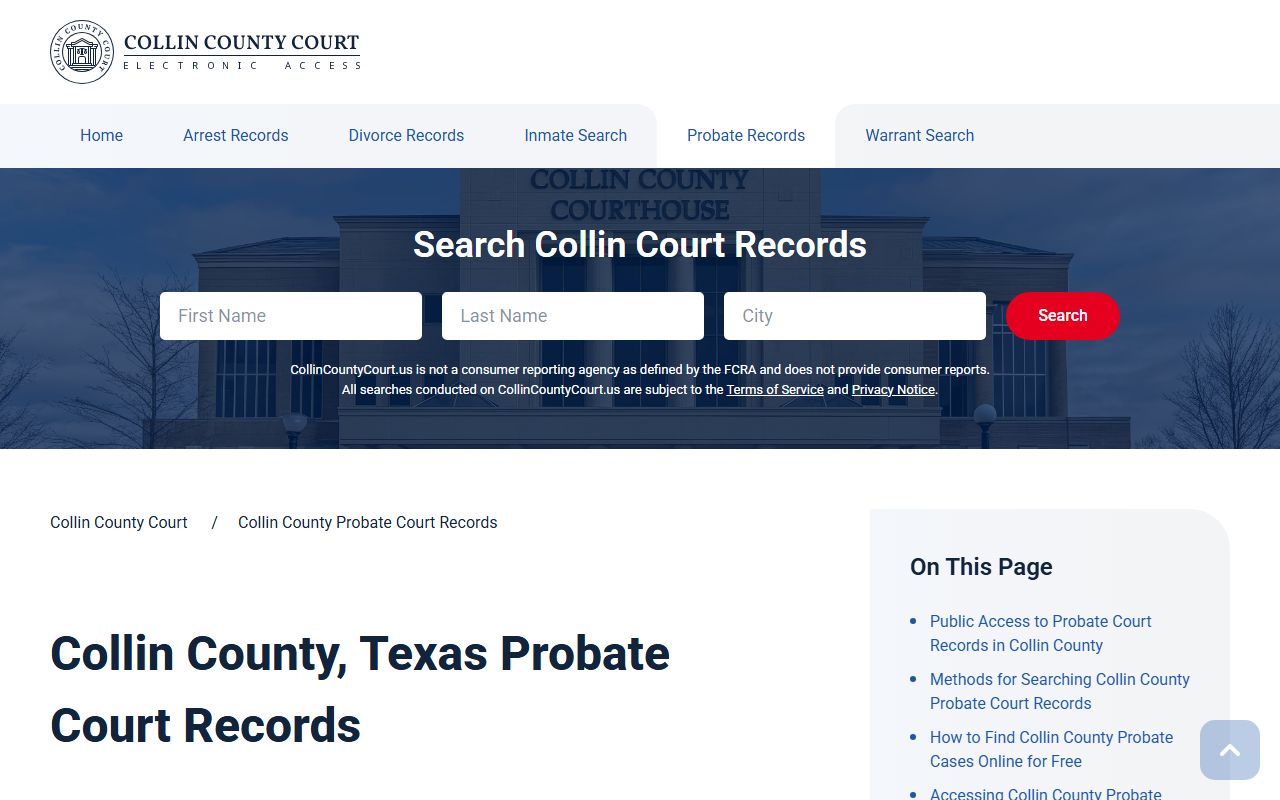
This page explains the probate process in Collin County and offers guidance on finding specific records. It is a good starting point if you are not sure where to begin your search.
For a broader search, the statewide re:SearchTX system includes Collin County court data. You can also visit the clerk's office in person to search records or request copies. In-person requests give you access to files that may not be fully digitized yet. Mail requests are accepted too.
Note: E-filing is mandatory for attorneys in Collin County, but pro se filers can still submit paper documents at the clerk's office.
Collin County Probate Fees
Copy and certification fees apply when you request probate documents from the Collin County Clerk. Contact the office for the current fee schedule since rates are updated periodically. Online payment options are available for convenience. The state e-filing fee is $30 per new case filed through eFileTexas.gov, plus $2 per envelope.
Fee waivers exist for those who cannot afford to pay. Under Texas Rule of Civil Procedure 145, you can file a Statement of Inability to Afford Payment of Court Costs. The form is on the Texas Courts Rules and Forms page. Small estates valued at $75,000 or less (not counting the homestead) may use the simplified affidavit process under Texas Estates Code Section 205 instead of full probate. This is typically faster and costs less overall.
Types of Collin County Probate Records
Probate records in Collin County include estate filings, guardianship documents, wills, court orders, and related papers. When someone files to probate a will or open an estate, the clerk creates a case file that holds every document submitted to the court. Letters testamentary, inventories, annual accounts, and final distributions all become part of that file.
The Texas Estates Code governs probate in all 254 Texas counties, including Collin. Independent administration under Chapter 257 is the most common type. The executor manages the estate without constant court oversight. Muniment of title under Chapter 256 works when all you need is to transfer property and there are no debts beyond any mortgage. Heirship proceedings under Chapter 304 come into play when there is no will and the court must determine who inherits.
Collin County probate records are public under Texas law. Anyone can ask to see them. Social Security numbers and bank account details are redacted. Guardianship cases involving minors may have restricted access. Mental health records are not open to the general public. For older Collin County probate records, check the Texas State Library and Archives Commission, which holds historical court records from many Texas counties.
Probate Legal Help in Collin County
If you need help with a probate matter in Collin County, there are several places to turn. The State Bar of Texas lawyer referral service at (800) 252-9690 can connect you with a probate attorney. You can search online at texasbar.com too.
TexasLawHelp.org provides free guides on probate topics like small estate affidavits and basic estate administration. The Texas State Law Library in Austin offers free research access and digital collections. The step-by-step guide on finding Texas probate records walks you through the whole process from identifying the county to getting copies. The Texas Office of Court Administration website has court directories and technical resources.
Probate is the number three legal aid request in Texas. Many people handle simple estates on their own. But if the estate is large, if there are disputes, or if no will exists, getting a lawyer is usually worth the cost. The ancillary probate guide may help if you are dealing with a non-Texas resident who owned property in the state.
Cities in Collin County
Collin County contains several of the fastest-growing cities in Texas. All probate cases for county residents go through the courthouse in McKinney.
Other communities in Collin County include Wylie, Murphy, Prosper, Celina, Anna, and Princeton. Parts of some cities like Richardson and Dallas also extend into Collin County. All probate filings go to the same clerk's office.
Nearby Counties
Collin County borders several other counties in the Dallas-Fort Worth metro area. Be sure to file in the county where the person lived. Under Texas Estates Code Chapter 51, venue for probate is the county of the person's last residence.